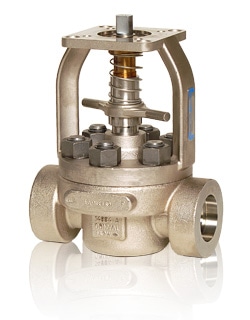
Conval Camseal® Ball Valves are designed for the world’s most demanding high-pressure, high-temperature applications.
Sizes through 4″
SA 105, SA 182-F22, SA 182-F91, SA 182-F92, SA 182-F316, SA 182-F316 Urea Grade, SA 182-F53 Other materials available upon request
Actuators – Electric, Pneumatic or Hydraulic
Limit switch – Single or double
Locking Devices – open, closed, or both Position Indicator Stem Shroud

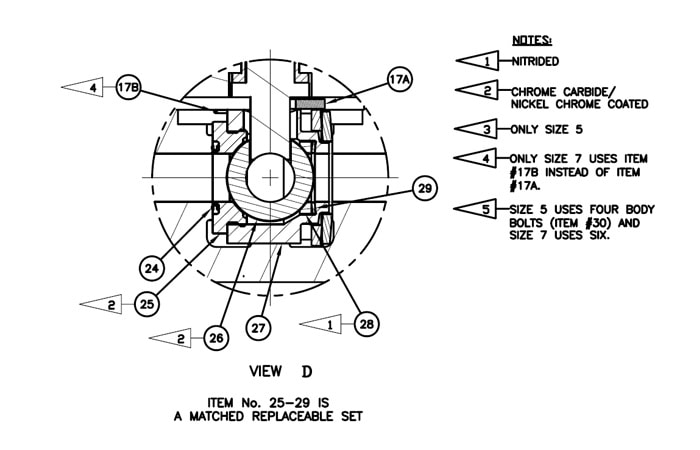
Superior bearing support of the blowout-proof stem ensures proper axial alignment and Zero Seat Leakage even on actuated valves. We are unique in that a bearing supports the stem above and below the packing. This greatly extends the life of the packing.
Conval’s highly-engineered Chrome Carbide coating system has superior bond strength and coating density to provide long-life and leak-free performance even in high pressure-drop applications.
An ISO-5211 integral mounting pad facilitates error-free, air, motor and gear operator actuation due to superior rigidity, precise alignment and a fully-guided stem bearing system. Lockout capability is standard.
In extreme environments, the simpler the design and the fewer the parts, the better. The durable single-piece stainless steel gland contributes to the longevity of the valve.
The Axial design ensures tight concentricity, which eliminates side loading of the packing and minimizes wear forces on the trim components. This feature is critical for superior ball valve performance.
The CAMSEAL® Ball Valve is much easier to renew than anything else on the market. The CAMSEAL® Ball Valve line provides a modular solution to rising maintenance expenses. Low acquisition cost is not as important as low cost over the serviceable life of a valve. Maintaining a Conval valve is far easier and much less costly than replacing a competitor’s valve.
Sophisticated state of the art techniques are used for applying hard coatings, grinding and lapping the ball and seat of the Camseal®. The extremely high density of the coating and the precise lapping techniques produce a ball-to-seat seal that is bubble tight, and will remain bubble tight during and after installation.
The Camseal® seat and the ends of the valve are separate components. In practice, this isolates the seat from the end of the valve during installation. Unlike valves in which the seat is an integral part of the valve end, this configuration isolates the seat from damaging heat of welding. This results in a ball valve that remains bubble-tight after it is welded in line and subsequently post weld heat treated.
The Camseal® ball valve has been subjected to rigorous computer-aided analysis, laboratory testing and field testing during its development. State of the art 3-D computer modeling was used to optimize the design details of the valve. Extensive laboratory testing was conducted to verify these results. Prototypes were subjected to severe thermal testing with repeated thermal cycles between ambient and 1200 degrees F. Pressure testing was done with repeated pressure cycles between atmospheric pressure and varying pressures; tests were performed with both gas and liquid. Steam blow-down testing was performed with a 2,000 psi pressure drop. Various mechanical tests were run. The valve has consistently passed a very rigorous program of tests.
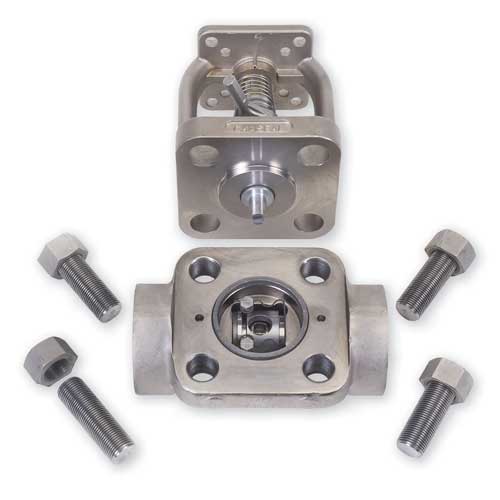
Top entry ball valves are used in piping systems where the bonnet of the valve can be removed to gain access to the ball and seats without removing the entire valve from the piping system. Typically made from a metal casting process, top entry ball valves require specific testing to make sure there are no defects. The body of Conval’s Camseal® top-entry ball valves is made from forgings, ensuring maximum performance without the porosity, expensive inspection and time consuming upgrade problems involved with castings. This strength makes them applicable for a variety of industries.
Top entry ball valves are typically used in process systems where in-line maintenance is preferred over full valve removal. As such, it is common for top entry ball valves to be used in high-pressure applications that require infrequent maintenance, like high integrity pressure protection system (HIPPS) valves.
Conval’s Camseal® top entry ball valves have the following advantages:
At Conval, every valve we create is designed for in-line maintenance and repair, which minimizes operational downtime. Other valve types—such as end entry or welded body ball valves—require the valve to be fully removed from the piping system before repairs or maintenance can be conducted.
This often involves cutting equipment to get the valve out and welding equipment to put it back in. With valves from Conval, there are also no special tools needed to make the repairs.
Metal seating protects the deterioration of the valve’s sealing elements in harsh operating conditions, such as high-temperature and/or abrasive, dirty, or corrosive environments. Metal seated valves can tolerate a broad variety of harsh conditions and can be coated to improve various physical resistances. Metal seats can be configured in three ways:
Ball valves may require additional features to operate effectively in harsh conditions, such as high-temperature or high-pressure environments. In these cases, the valves must be made from special materials and often require metallic or ceramic coatings to protect the units from surface-related wear problems and other service related issues. Suitable stem materials are also required to keep the valve functioning properly in harsh conditions.
Common materials for coatings include:
Conval was established in 1967 and has since grown into the world’s premier manufacturer of high-quality, high-pressure forged steel valves. Our global team of experts provides valves for the most demanding applications in the world. We continue to develop new products that address the evolving needs and trends in the valve industry.
Please contact us or request a quote for more information about our top entry ball valves or other process solutions.