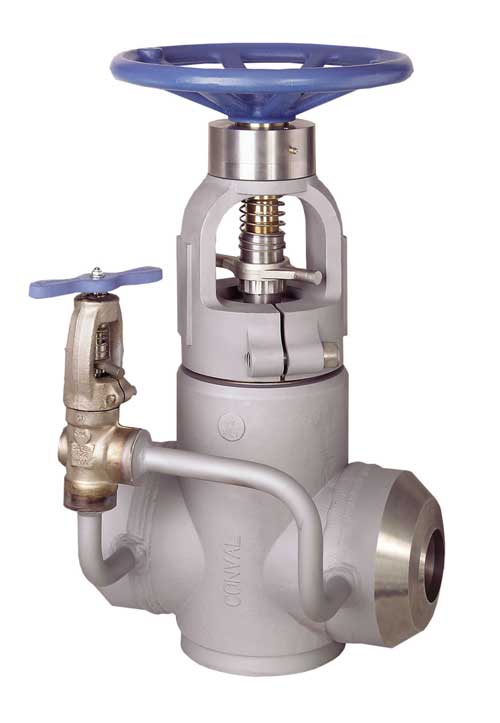
Conval Swivldisc® Gate Valves are designed for the world’s most demanding high-pressure, high-temperature applications.
Sizes through 4″
Nominal ASME Class 900/1500/2500 Intermediate ASME Class 1195/2155/3045/3500
SA-216 Gr. WCB, SA-217 Gr. WC9, SA-217 Gr. C12A, SA-351 Gr. CF8M
Other materials available upon request
Bypass Actuators – Air, electric, pneumatic, or hydraulic Limitswitch – Single or double Locking Devices – open, closed, or both Position Indicator Stem Shroud
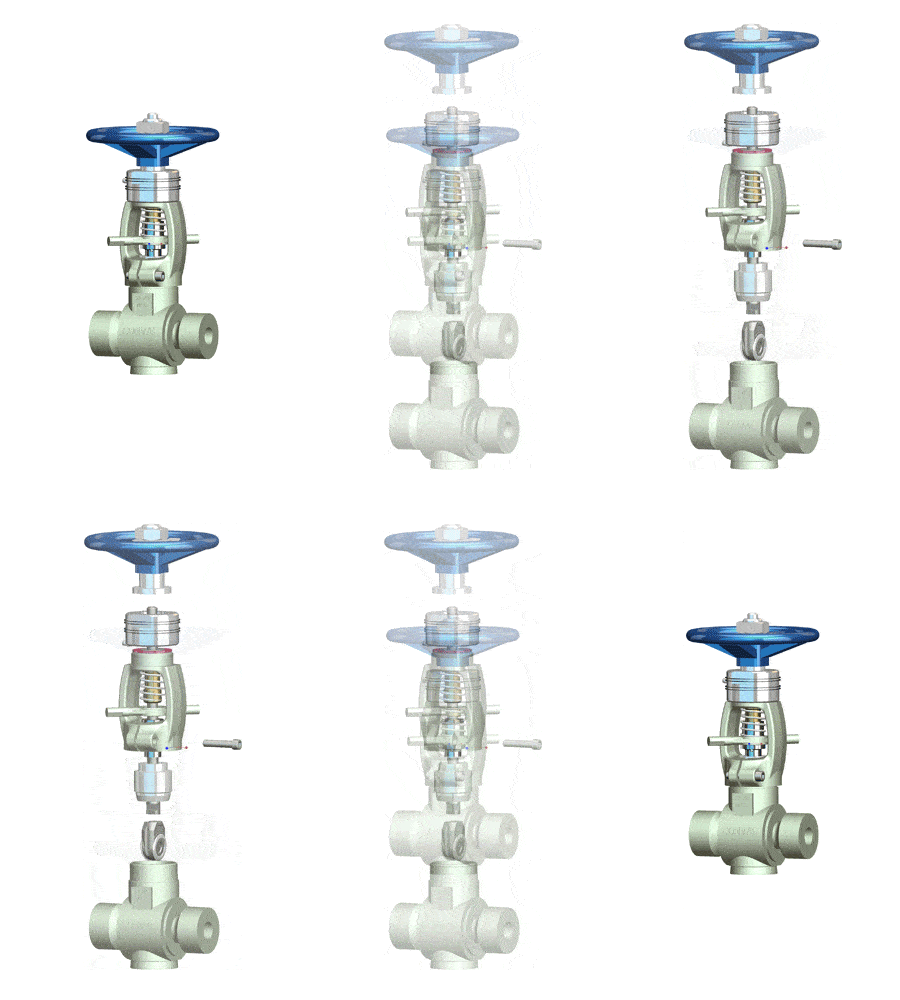
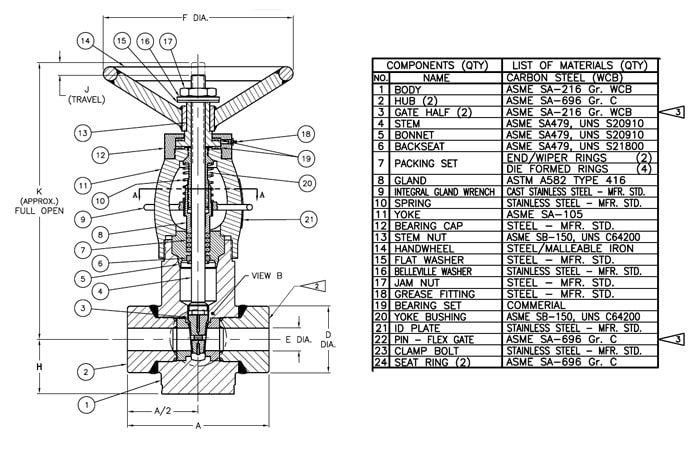
The simple and effective pressure seal bonnet provides ready access for servicing with no welds to cut or seal rings or gaskets to replace. The body-to-bonnet joint integrity is maintained through countless thermal cycles.
The packing system delivers the best performance available. The one-piece gland with integral gland wrench is readily adjustable at any time. The fine finish of the stem and chamber combines with high-performance graphite packing to ensure long packing service life.
In extreme environments, the simpler the design and the fewer the parts, the better. The durable single-piece stainless steel gland contributes to the longevity of the valve.
The Axial design ensures tight concentricity, which eliminates side loading of the packing and minimizes wear forces on the trim components. This feature is critical for superior gate valve performance.
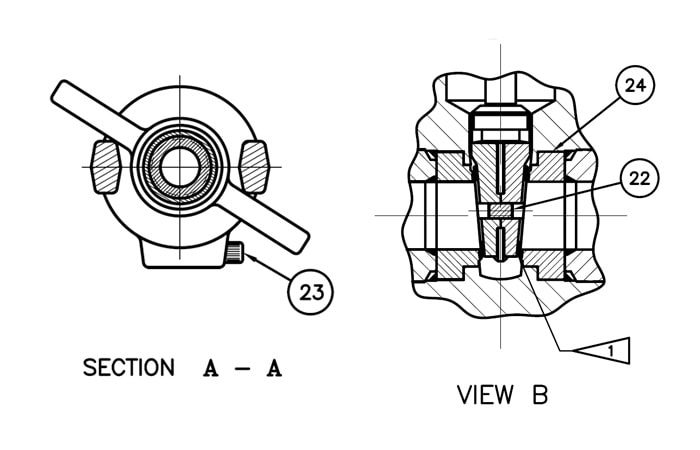
The Swivldisc® pressure-actuated backseat provides maximum valve integrity by ensuring a positive internal stop for the valve stem and disc assembly.
The Swivldisc® Gate Valve is much easier to renew than anything else on the market. In addition, the Swivldisc® Gate Valve line provides a modular solution to rising maintenance expenses. Low acquisition cost is not as important as low cost over the serviceable life of a valve. Maintaining a Conval valve is far easier and much less costly than replacing a competitor’s valve.
Three main categories divide the various types of gate valves. Those categories include variations in the type of disc or wedge, the type of body-bonnet joint, and the type of stem movement used in opening and closing the valve. Each type provides different benefits for various applications.
Solid Wedge Gate Valve
Due to its simplicity and durability, the solid wedge gate valve is the most common in small diameter applications. This valve may be installed in any position and is suitable for handling nearly any fluid type. This valve provides no compensation for adjusting seat alignment due to thermal expansion or pressure loads. These valves are most common in low-to-moderate pressure and temperature applications.
Flexible Wedge Gate Valve
The flexible wedge gate valve improves upon the solid wedge valve by using a cut around the perimeter of the wedge to permit the wedge to flex or adjust for changes in seat alignment caused by thermal expansion, pressure loads, or wear. They are used in applications with higher temperature and pressure requirements to protect against thermal binding. Conval incorporates this design in our Swivldisc gate valve.
Split Wedge or Parallel Disc Gate Valve
In this type of gate valve, the wedge is either split into two segments or is comprised of two parallel discs, held together by a spring-loaded mechanism. This design allows for bidirectional sealing capability. The greater freedom of movement between the segments or discs prevents thermal binding. This type of valve is best used in applications above 800 degrees Fahrenheit.
Gate valves can also be classified according to the various configurations used to join the bonnet and body of the valve. Joint type variations include:
Screwed Bonnet
The bonnet of the valve screws into the body of the valve. This is the simplest and most common joint type used in inexpensive valves.
Bolted-Bonnet
This type requires a flanged surface on both the body and the bonnet. The two components bolt together with a gasket between them to prevent leakage. It is a very popular gate valve design used in a broad range of applications.
Welded-Bonnet
This type of gate valve is distinguished by the welded joint between the body and bonnet. These valves work well in applications requiring less weight and infrequent or no disassembly. However, this design is not maintenance-friendly.
Pressure-Seal Bonnet
Body cavity pressure increases or decreases the seal between the body and bonnet in this type of gate valve. This type works best in high-pressure and high temperature applications.
Outside stem and yoke (OS&Y) valves are characterized by the rising threaded valve stem as the valve opens.
In contrast to the rising-stem type, the stem remains in a constant position while the gate or disc moves up and down the stem thread. These gate valves often apply to situations where there is minimal clearance, which does not allow for a rising stem.
The design of our gate valves allows them to perform well under high pressures. Features that support high-pressure performance include:
High quality forged and cast materials for durable performance